Wichita Electrical Services

Commercial Electrical in Wichita, KS

Commercial electrical in Wichita - service and panel work, lighting and sign circuits, tenant build-outs and troubleshooting for the metro's shops, restaurants, offices and warehouses.

The storm ledger is documented, not folklore. On May 3, 1999, a tornado from the same outbreak that struck Kansas cut through Haysville and south Wichita, destroying the town's historic core. On April 14, 2012, an EF3 crossed southeast Wichita through Oaklawn toward the McConnell Air Force Base side of the city. Ice storms in January 2002 and December 2007 coated lines across Kansas and left Wichita neighborhoods dark for days. Kansas also sits in one of the more lightning-active regions of the country. Surge damage, standby power and service-mast condition are standing topics here because the record made them so.

The second force is the modern load arriving in old houses. Electric vehicle chargers, hot tubs, home offices, workshop tools and added living space all draw on panels that were sized for a fraction of today's demand - a 100-amp service that was generous in 1955 is an arithmetic problem in a house with two chargers and a spa. Much of the metro's electrical work is this reconciliation: reading what a house now asks of its system, and matching the system to it honestly.

Signs You Need Commercial Electrical

A tenant changeover is coming

New use, new load, old service: every change of tenant is the building's electrical system being re-interviewed. The load read at build-out is the simplest version of that conversation.

Breakers trip during business hours

A trip that arrives with the lunch rush, the stage lights or the wash cycle is the load profile introducing itself. Commercial trips are scheduled by the business's own day - which makes them diagnosable by it, too.

The panel directory is fiction

Directories that name former tenants and vanished equipment are not paperwork untidiness; they are the building's emergency map drawn wrong. Restoring it is real work with real value at 2 a.m. some future night.

Lighting is a patchwork of eras

Fluorescent ghosts, LED retrofits in three color temperatures, exterior and sign lighting on timers older than the staff - commercial lighting accumulates like sediment, and a single coherent pass is how it gets cheap to run and pleasant to work under.

An inspection, insurer or landlord has asked questions

Commercial electrical condition is a documented thing: the assessment that answers those questions in writing, with the corrections scoped, is a business asset with a date on it.

Equipment is being added

The kitchen line, the compressor, the EV fleet charger, the new sign - each is a capacity question at a service that may have been sized for a gentler business. Asking it before the equipment arrives is the entire discipline.

Why Commercial Electrical Is a Standing Job in Wichita

The metro's commercial buildings were built by its booms: oil-era downtown, the postwar retail strips, the warehouse districts converted to entertainment, the suburban centers of each growth decade. Their services were sized for their first tenants; their current tenants are rarely their first. Commercial electrical work here is mostly that gap, professionally closed.

Restaurants and venues set the load pace: kitchens and stages draw in spires that residential arithmetic never meets, on services that began life feeding a showroom or a stockyard office. The load profile - measured across a real week - is the only honest design input, and it is the one this work insists on.

Storm season grades commercial systems in public: a sign dark, a kitchen down, a district's worth of surge damage in one spring week. The businesses whose panels carried protection and whose directories told the truth reopen first; readiness is a commercial virtue with a cash value.

Commercial Electrical Through the Wichita Year

Winter in Wichita is mild until it is not: the ice storms are the season's defining electrical events, when coated lines and falling limbs take down drops and masts across whole districts at once, and plains wind drives the chill through every exterior connection. Between storms, the winter load story is space heaters on bedroom circuits, holiday lighting on old exterior outlets, and heating equipment running its longest hours - each a small test of circuits that sit idle the rest of the year.

Fall is the assessment window and the second severe season. October brings its own storm risk on the plains, and the ice season is close enough to plan for: generator service, surge checks, and the repairs the summer exposed, all done while the weather is calm. It is also when honest electrical advice happens, because a system inspected in October is being judged on the evidence of the season just passed, not on hope.

Spring is storm season and preparation season at once. March through May is the peak of the supercell calendar in Sedgwick County, when the metro's outages, surge events and downed service drops concentrate. The electrical work that matters happens just ahead of it: panels checked, surge protection in place, standby generators serviced and exercised, and trees near the service drop reported before the wind finds them. The first big storm week of the year grades every home's preparation without mercy.

Commercial Electrical in Depth

Commercial electrical work is best understood as a business system that happens to run on wire: its failures are measured in trading hours, its documentation in leases and insurance files, its quality in whether the next tenant inherits a legible building. The load profile of the business's real week - not its nameplate, not its lease guess - is the design document everything else follows.

The second discipline is sequence. Assessments before leases, capacity before equipment, outages planned with the business rather than announced to it: commercial work earns its keep in the order of its decisions. The buildings that get this right read, electrically, like well-kept books - every chapter labeled, every system accounted for - and they are the buildings whose 2 a.m. emergencies are shortest.

Choosing the Right Help

Choose commercial help by the documentation. The firm that load-profiles your real week, scopes around your trading hours and hands over directories and records with the work is maintaining a business asset; the one that quotes from a walkthrough is maintaining a truck. Ask what the building's file will contain when they leave. That file - more than any single repair - is what the next decade of your building's life will run on.

The Conditions Behind It

Wichita sits on the central plains where Gulf moisture runs into dryline storms off the high plains, and the weather writes the electrical calendar here: a spring supercell season that tests every service mast and overhead drop in the metro, a summer of peak cooling loads under hundred-degree stretches, a second severe season in the fall, and winters that can wrap the whole region in ice. An electrical system in Wichita is not judged on a mild day - it is judged in the storm weeks, and the pages here are organized around that.

The metro's wiring is a layered archive of its building history. The oldest neighborhoods along the Arkansas and Little Arkansas rivers still hold knob-and-tube runs, cloth-insulated cable and fuse boxes from the 1880s through the 1930s. The war years and the aircraft boom built whole districts - Planeview, the south side, the McConnell fringe - on the panels of their day, including families from that era that inspectors now flag on sight. The mid-1960s to the mid-1970s added aluminum branch wiring to thousands of homes. And the growth edges in Maize, Andover and Bel Aire build at 200 amps with chargers and standby generators planned from the start. Which layer a house sits in decides most of its electrical story.

How Commercial Electrical Works

Read the building's real load

Service size, panel condition and a load profile measured against the business's actual week - the design input for everything that follows.

Scope around the business's hours

Work sequenced for trading hours, inspections booked against the calendar, and outages - where the work needs them - planned with the business, not announced to it.

Do the work to commercial standard

Circuits, lighting, panels and equipment connections installed and documented to the building's documentation file, labeled as found truth.

Hand over the paperwork

Directory, load record and documentation the landlord, insurer and next tenant will ask for - the visit's deliverable is a system and its file together.

Doing It Yourself vs a Professional

The DIY Route

  • Tenant staff resetting trips and swapping lamps while the load question goes unasked - the building's arithmetic does not care who ignores it
  • Adding kitchen or shop equipment onto whatever circuit is nearest converts a capacity plan into a failure schedule
  • Inheriting a mystery panel and leaving it mysterious - the first emergency inherits the mystery at emergency prices
VS

The Professional Route

  • Load-profiles the business's real week before prescribing anything
  • Sequences work around trading hours and inspections as part of the scope, not as favors
  • Delivers documentation with the work - directory, readings and records the building keeps

Keep It From Coming Back

Commercial systems are maintained by file and by calendar: documentation current, loads measured, assessments scheduled. These habits are the building's side of the bargain.

  • Keep the panel directory current at every tenant or equipment change; it is the building's simplest safety system.
  • Measure the load before adding equipment - a week of real readings settles arguments a catalog cannot.
  • Put the building's surge protection on the same review rhythm as its other systems; commercial electronics concentrate value per panel.
  • Schedule electrical assessments in the calm commercial months, not in the week the inspector or the season chooses.
  • Keep one documentation file per building: permits, load records, directories, assessments. Buildings with files get better answers from everyone.
  • Treat exterior and sign lighting failures as electrical calls, not bulb runs - the circuit is usually the author of the pattern.
Commercial Electrical in the Surrounding Communities

The communities around Wichita share its storm seasons and its lightning - with their own twists of housing age, growth and grid exposure.

Commercial Electrical in Clearwater

Clearwater is a small railroad-era city southwest of Wichita on the Chikaskia River, with a historic downtown and a mix of older homes and new subdivisions drawing commuters to the metro. Its older streets keep a small-town canopy of elm and hackberry planted generations back.

Commercial Electrical in Mulvane

Mulvane is an old railroad town south of Wichita on the Arkansas River, with a preserved Main Street and depot, newer growth near the Kansas Star Casino, and a strong small-city identity. The river's bottomland timber frames the town on its low sides.

Commercial Electrical in Rose Hill

Rose Hill is a growing Butler County town southeast of Wichita, where newer subdivisions and acreage homes have spread around its schools. It draws families who want country space within commuting range - and its trees split between new plantings and old farm timber.

Commercial Electrical in Bel Aire

Bel Aire is a growing city on Wichita's north edge, built around lakes, parks and newer subdivisions along the K-254 corridor. It has grown from a small community into one of the metro's active family suburbs, planting its canopy as it goes.

Where Commercial Electrical Is Needed Most

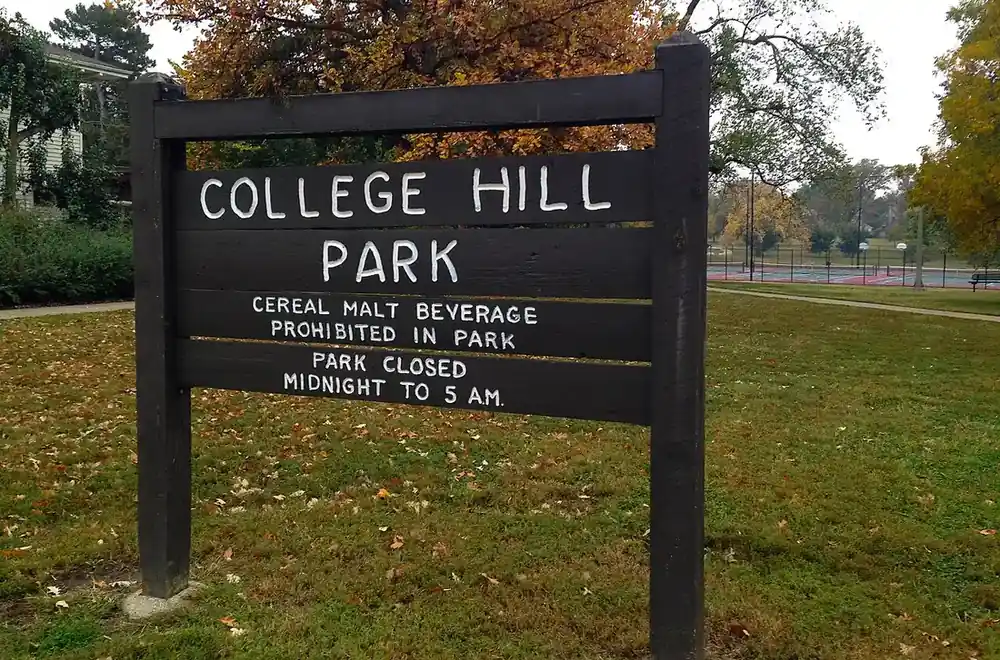
In the historic core and the central neighborhoods - Riverside, College Hill, Eastborough, Downtown Wichita, Old Town and Delano, Midtown, South Wichita, Planeview, Oaklawn - the wiring runs from knob-and-tube and fuse boxes in the pre-war districts to the flagged postwar panels of the in-city suburbs, and commercial electrical follows that record: era wiring care on the old streets, panel decisions in the postwar blocks, and storm exposure that grows toward the open edges.

Across the north side, the lake country and the inner ring - East Wichita, Northeast Wichita, Uptown Wichita, West Wichita, Southwest Wichita, Auburn Hills and North Wichita, Benjamin Hills, Northwest Wichita, Derby, Andover, Haysville - sit the growth waves of the 1960s onward, the aluminum-branch-wiring years and the first subdivisions wired for modern loads room by room, which together make this the steadiest commercial electrical territory in the metro.

Beyond the city line, the same work runs in Clearwater, Mulvane, Rose Hill, Bel Aire, Park City, Valley Center, Kechi, Maize, Goddard, Newton, Hutchinson - fast-growing suburbs, university and base communities and prairie-edge towns where new construction, acreage homes and wide-open storm exposure add their own chapters. Every one of these area pages carries the local detail for commercial electrical in that community.

Coverage, In Full

Commercial Electrical runs across the whole service map: Downtown Wichita and Old Town; Riverside and Delano along the rivers; Midtown and North Wichita; College Hill and Uptown; Eastborough and East Wichita; Northeast Wichita and Bel Aire; South Wichita, Planeview and Oaklawn; West and Northwest Wichita; Benjamin Hills and Auburn Hills; Southwest Wichita; and beyond the city in Derby, Andover, Haysville, Clearwater, Mulvane, Rose Hill, Park City, Valley Center, Kechi, Maize, Goddard, Newton and Hutchinson. One call covers all of it - the local pages above carry the detail for each. If your street is not named here, call anyway: routes grow with demand, and most metro addresses are already within reach of a scheduled run.

From the Wichita Electrical Guides

Home EV Charging in Wichita: What Installation Really Involves

A home charger is among the largest continuous loads a house carries, so installation starts with a load calculation at the panel - the arithmetic that decides the charge rate your house can honestly feed. Match the rate to your driving, not the maximum available: most metro commutes are refilled overnight by a mid-size circuit, and load management lets many older panels serve an electric household without a service upgrade.

Read the Guide

Old Wiring in Wichita Homes: Knob-and-Tube, Cloth and Aluminum

Wichita homes carry four wiring eras: knob-and-tube and cloth cable in the pre-war districts, postwar copper with its era's panels, aluminum branch wiring from the mid-1960s to mid-1970s, and modern copper since. Each era has a known behavior: knob-and-tube ages by insulation and burial, cloth by crumbling, aluminum at its connections. The remedy follows the era, not the symptom.

Read the Guide

Why Does My Breaker Keep Tripping? A Wichita Troubleshooting Guide

A breaker that trips repeatedly is reporting one of three things - an overloaded circuit, a short or ground fault, or a breaker at the end of its own life - and each has a different remedy. Work the order: note what was running, unplug the circuit's loads, reset once, and read what the breaker does next. Its behavior is the diagnosis's first chapter.

Read the Guide

Commercial Electrical Questions

What affects the cost of commercial electrical work in Wichita?

The service size and condition, the load the business actually draws, hours constraints the schedule imposes, permit and inspection scope, and the documentation required. Commercial numbers follow the load read and the site plan; a panel photograph produces an estimate the way a menu produces lunch.

Can you assess a building before we sign a lease in Wichita?

Yes, and it is among the highest-value visits in this catalog: service capacity against your equipment list, panel condition and era, the directory's honesty, and the corrections your use will require - documented before the lease makes them your landlord's leverage or your surprise. Buildings are electrically legible; the visit reads this one aloud.

What documentation should a business keep for its electrical system?

The panel directory, the last load assessment, permits and inspection records for alterations, and the surge and safety devices' install dates. That file answers insurers, landlords, buyers and inspectors in their own language, and it begins with the first assessment that bothers to write things down.

Does commercial work here include parking lot and warehouse lighting?

Yes - high-bay, lot and warehouse lighting are standard commercial scope, including the layout and controls side: which fixtures, on which circuits, under whose timing. Lighting is commonly the commercial system's largest continuous load, which makes its coherent renewal - one pass, one color, one control logic - the rare upgrade a business can see from its own parking lot.

Can commercial work in Wichita be done outside business hours?

Scheduling around trading hours is the discipline of this category: assessments and much installation work can be sequenced for early mornings, closed days or overnight windows, and the outages a project needs are planned with the business in advance. The scope conversation names the schedule honestly - which hours, which circuits, which days - before anyone commits.

What does a tenant build-out in Wichita need electrically?

A load read of the inherited service against the new use, panel and circuit work for the new layout, lighting and signage circuits, and the documentation set the landlord and the city will want. Build-outs fail electrically in one classic way - discovering the service's limits after the lease's equipment is ordered - which the load read exists to prevent.

Our Wichita business keeps tripping breakers at peak hours. Is that a panel problem?

It is a load-profile problem until measured otherwise: the peak-hour trip is the service meeting the business's real maximum, which may exceed the design, may involve one failing breaker, or may be one circuit carrying what three should. A week of readings at the panel separates those causes, and each has a different remedy and a different price - which is why the measurement comes first.

Do you work on sign and exterior lighting in Wichita?

Yes - sign circuits, parking and exterior lighting are core commercial work, and their failures are usually circuit stories rather than lamp stories. The assessment reads the circuit, its controls and its weather exposure, so the fix addresses why this fixture, this month, again - instead of scheduling the same bucket-truck visit quarterly.

Please note: Wichita Electrician Pros is an independent directory and referral service, not an electrical contractor. The professionals reachable through this site are independent businesses; any agreement for work is between you and the professional you engage. Service information on this site is general educational material - the scope of any real electrical work is set by an on-site inspection.

A Breaker That Keeps Tripping, Lights That Flicker or a Panel Due for an Upgrade?

One call connects you with an electrical professional serving Wichita and the surrounding metro communities - assessment, repair, service and installation.

📞 Call Now
📞 Call Now