
Smoke and CO Detectors in Eastborough
Smoke and CO Detectors for Eastborough homes - local conditions, a clear process, and one call to get it started.
The Eastborough pattern for this work is set by its streets - storm seasons, lightning tracks and building eras layered block by block.
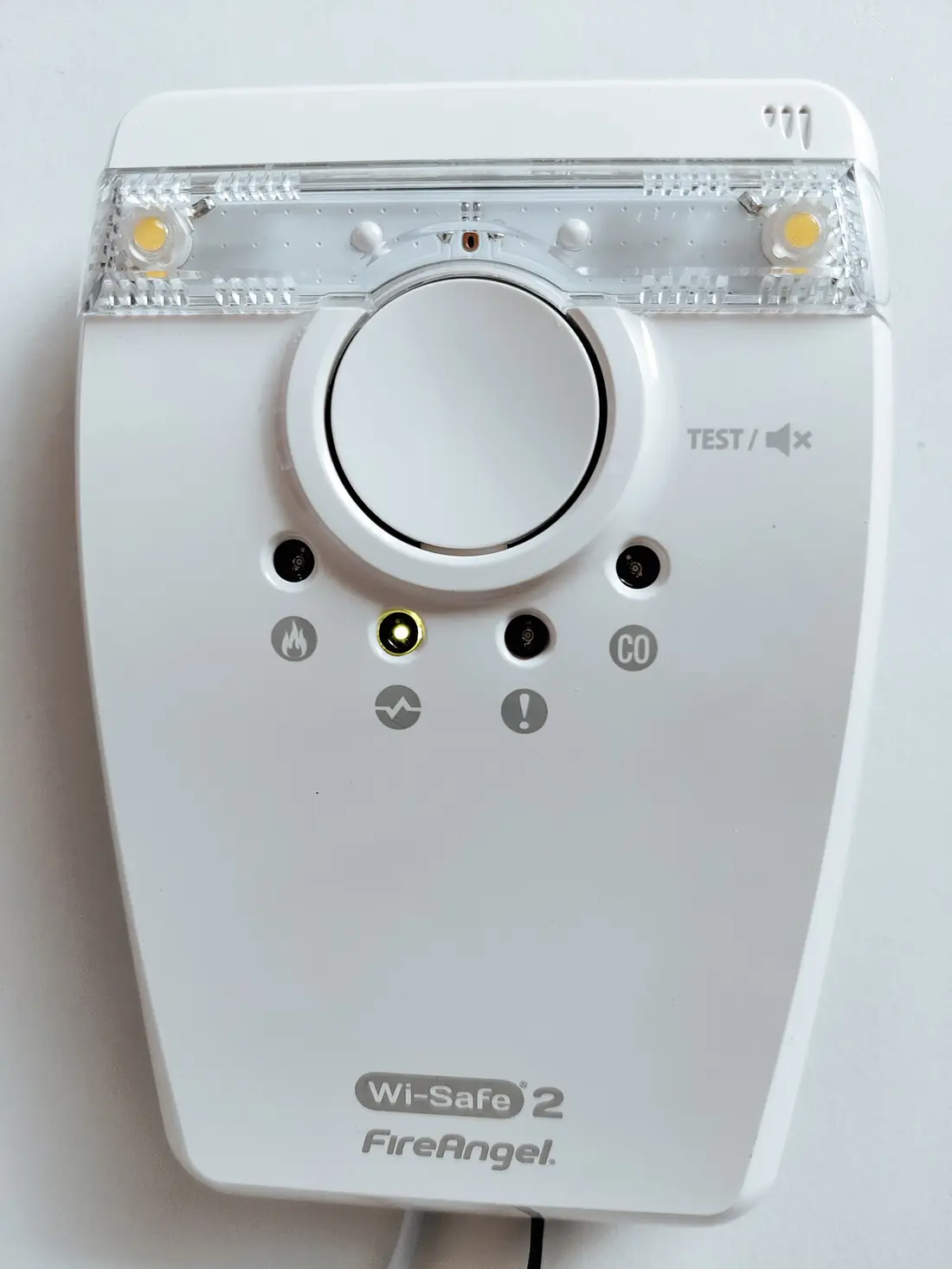
Carbon monoxide is the detector story Eastborough tells in winter: furnaces, water heaters, fireplaces and attached garages all produce it, and it gives no warning of itself. Smoke gets the headlines; CO gets the discipline - placement, interconnection and expiry dates treated as a system, not a shopping list.
Eastborough is a small independent city entirely surrounded by Wichita, incorporated in the 1930s around a landscaped plan of winding lanes, lakes and parkways. Its larger homes sit on generous wooded lots, and the landscaping was designed as part of the city itself.
This part of the metro has its own version of every electrical system. Larger custom homes from the 1930s onward - brick, stone and stucco - with mature, designed landscaping - and that shapes the electrical work directly. Eastborough's larger custom homes run larger systems to match: early 200-amp services alongside older 100-amp panels, long laterals across generous lots, and outdoor loads - landscape lighting, lake pumps, pool equipment - that smaller neighborhoods never ask for. For smoke and co detectors in Eastborough, for detector work, the visit reads dates and placements room by room before any unit is replaced.
There is a reason crews know Eastborough by its landmark: the pattern near Eastborough's lakes, lanes and mature tree canopy - old wiring, new builds, flagged panels, growth-edge systems - repeats faithfully across the whole map.
Signs Eastborough Homes Need Smoke and CO Detectors
Units are not interconnected
Island detectors warn the room they are in.
A fuel-burning appliance has no CO coverage nearby
Furnaces, fireplaces, gas water heaters and attached garages each argue for CO detection placed by the rules of the gas - and older metro homes are commonly missing it exactly where it belongs.
A detector is past its date
Every detector carries a manufacture date, and its sensor's reliable life runs from that date, not from when it was installed or when its battery last changed.
Why This Work Runs in Eastborough
Winter writes the CO chapter: the first cold weeks light every furnace and fireplace in the metro at once, and the season's CO calls follow the heating map. The detector system's job is to be already installed, already placed and already current when that week arrives.
Eastborough's larger custom homes run larger systems to match: early 200-amp services alongside older 100-amp panels, long laterals across generous lots, and outdoor loads - landscape lighting, lake pumps, pool equipment - that smaller neighborhoods never ask for. The designed landscape hides a designed electrical system aging at the same pace, and the work is reading it whole before any one part is touched.
In Eastborough, that plays out street by street - for detectors, watch the dates - placement is the map, expiry is the clock. The Eastborough detail that matters most is easy to miss from the street: what the blocks behind Eastborough's lakes, lanes and mature tree canopy are doing with panel age and storm exposure.
Spring's second act is the first-storm audit. After the first big outbreak week, the pattern repeats street by street: the mast that held and the one that pulled loose, the panel that shrugged off the surge and the electronics that did not, the generator that started and the one that had not been exercised since last year. Owners who read that week honestly start their decisions from evidence; owners who skip it find out across May, one storm at a time.
If the work involves a buried run, a gated yard, a crawlspace or a panel behind stored paint cans, say so when you book. The method adjusts - equipment, crew mix, a longer window - and it adjusts best before the truck rolls. The same goes for gates, dogs and the alarm system nobody should surprise. Details given early are cheap; details discovered on site cost a second visit.
Every season asks Eastborough a different question - spring asks about surges, summer about load, fall about readiness, winter about backup.
One more preparation that matters in storm country: tell the office about locked gates, alarm systems and any rooms that must stay closed. What surrounds the equipment shapes the method more than most homeowners expect.
How Smoke and CO Detectors Works in Eastborough
The full step-by-step process for this service - assessment, scope, the work itself and follow-up - is laid out on the main Smoke and CO Detectors page. In Eastborough the same sequence runs with the local map in hand: the panel generations around Eastborough's lakes, lanes and mature tree canopy, the housing pattern described above, and the storm exposure this neighborhood actually carries.
The Eastborough Angle
Every neighborhood writes its own version of this work, and Eastborough writes it around Eastborough's lakes, lanes and mature tree canopy and the blocks that feed into it. The buildings themselves give the first clues about the systems. Larger custom homes from the 1930s onward - brick, stone and stucco - with mature, designed landscaping.
On the service side, the pattern is written by the neighborhood itself. Eastborough's larger custom homes run larger systems to match: early 200-amp services alongside older 100-amp panels, long laterals across generous lots, and outdoor loads - landscape lighting, lake pumps, pool equipment - that smaller neighborhoods never ask for. The designed landscape hides a designed electrical system aging at the same pace, and the work is reading it whole before any one part is touched. A proper smoke and co detectors call in Eastborough therefore starts with reading - the exposure, the panel, the evidence - and only then moves to the work.
Eastborough does not sit alone on the map. It weathers the same storm seasons as College Hill, East Wichita and Andover - the same fronts cross the metro, the same lightning works the same panels, and the same ice loads the same lines within the same few days. Which is the last word on method here: read the neighborhood pattern, not just the system that called.
On the route map, Eastborough sits in the independent city within wichita group, ZIP 67206 - close enough to College Hill, East Wichita that crews work them on the same runs. That local memory is the quiet advantage of route-based work in Eastborough.
Ask what separates the Eastborough homes that weather the year quietly and the answer is rarely the equipment itself. It is the calendar: readings taken early, protection fitted before the lightning, decisions made while the evidence of the season is freshest.
Prevention That Helps in Eastborough
- Test detectors monthly with their own buttons, and treat any unit that fails its test as replaced, not negotiated with.
- After any renovation that moves walls, doors or bedrooms, redraw the detector map; placement follows the floor plan, not the history.
- Never borrow a detector's battery, and never silence a chirping unit by removing it - the chirp is the message, and the message is cheap to answer.
Larger custom homes from the 1930s onward - brick, stone and stucco - with mature, designed landscaping.
Keep Exploring
Smoke and CO Detectors nearby:
- Smoke and CO Detectors in College Hill
- Smoke and CO Detectors in East Wichita
- Smoke and CO Detectors in Andover
- Smoke and CO Detectors in Northeast Wichita
More services in Eastborough:
- Generator Installation in Eastborough
- Emergency Electrical Repair in Eastborough
- Electrician Services in Eastborough
- Breaker Panel Upgrade in Eastborough
See the full electrical page for Eastborough and the Smoke and CO Detectors overview for Wichita.
Smoke and CO Detectors in Eastborough - Questions
Why does my detector chirp even with a new battery in Eastborough?
Because the chirp is probably not about the battery: end-of-life signaling is built into detectors precisely so an expired sensor cannot be silenced into continued service by fresh batteries. Check the manufacture date on the unit - if the date says the sensor's life is over, the chirp is the device doing its final job correctly.
Should detectors in Eastborough be hardwired or battery powered?
Hardwired with battery backup, interconnected, is the standard newer construction is built to and the target older homes are upgraded toward: it removes the dead-battery failure and makes one sensing unit warn the whole house. Quality battery and wireless-interconnect units are the honest option where wiring cannot reasonably go. The plan for your house is drawn from its construction, not from a preference.
When is Smoke and CO Detectors most needed in Eastborough?
Need follows the season and the neighborhood together: the storm months raise the baseline everywhere, and Eastborough's specific exposure - its housing era, its panel stock, its position under the storm tracks - decides which weeks bite hardest. A local assessment reads both clocks at once.
A Breaker That Keeps Tripping, Lights That Flicker or a Panel Due for an Upgrade?
One call connects you with an electrical professional serving Wichita and the surrounding metro communities - assessment, repair, service and installation.
📞 Call Now